
How to Check Criminal History in Jefferson County
The Jefferson County Clerk records-search page is the best first stop for a local criminal case. It routes readers to the Jefferson County Online Court Records Search, or OCRS. Search by party name to discover a case, then use the case number to narrow the file. Note the court division, filing date, status, charges, and disposition. The free index is useful, but an index entry may not include every document image. A recent jail event can appear before the prosecutor files a court case.
Prepare a full legal name, spelling variants, an approximate event date, and any case, citation, booking, or Resident ID number already known. Date of birth can help distinguish people, but public views may limit personal data. Names alone are not fingerprint identification. Compare the arresting agency, dates, court, and outcome before deciding that a result belongs to the person sought.
- Search Jefferson OCRS for filed Circuit Court and County Court cases.
- Check the JCSO Media Intake Report for current or recent county jail intake.
- Ask the agency that made the arrest for its incident or arrest report.
- Compare filed charges and disposition in the court docket.
- Use FDLE for a statewide search or fingerprint personal review when identity and completeness matter.
Four Jefferson County Arrest Records
One Jefferson County arrest can create four records with different owners. The arresting agency writes the report and probable-cause account. JCSO makes the booking and custody entry. The State Attorney chooses whether to file charges, and the Clerk records the resulting court case. A fingerprintable event can also flow to FDLE, where later disposition data may join the arrest cycle. These sources answer different questions.
Record flow: Arresting agency › JCSO booking › State Attorney filing › Jefferson Clerk disposition › FDLE repository update.
An arrest charge may change, be declined, or end in dismissal or acquittal. A court docket does not contain the full police narrative. An FDLE result does not replace the pleadings and images in the Clerk file. Read the sources together instead of treating one line as the whole history.
Note: A booking entry proves intake into custody, while guilt depends on the later court outcome.
Official Florida Background Checks
The Florida Department of Law Enforcement check options cover Florida repository records. Instant Search uses demographic data and produces an immediate, noncertified result. A staff-conducted certified or noncertified search is also available. FDLE cautions that a name-based candidate is not a positive fingerprint match. People reviewing their own record or seeking a correction should use the fingerprint-based Personal Review channel.
The official check-options screen shows the products and their different output. It also helps a Jefferson County reader choose between a quick name search, a mailed certified result, and personal fingerprint review.
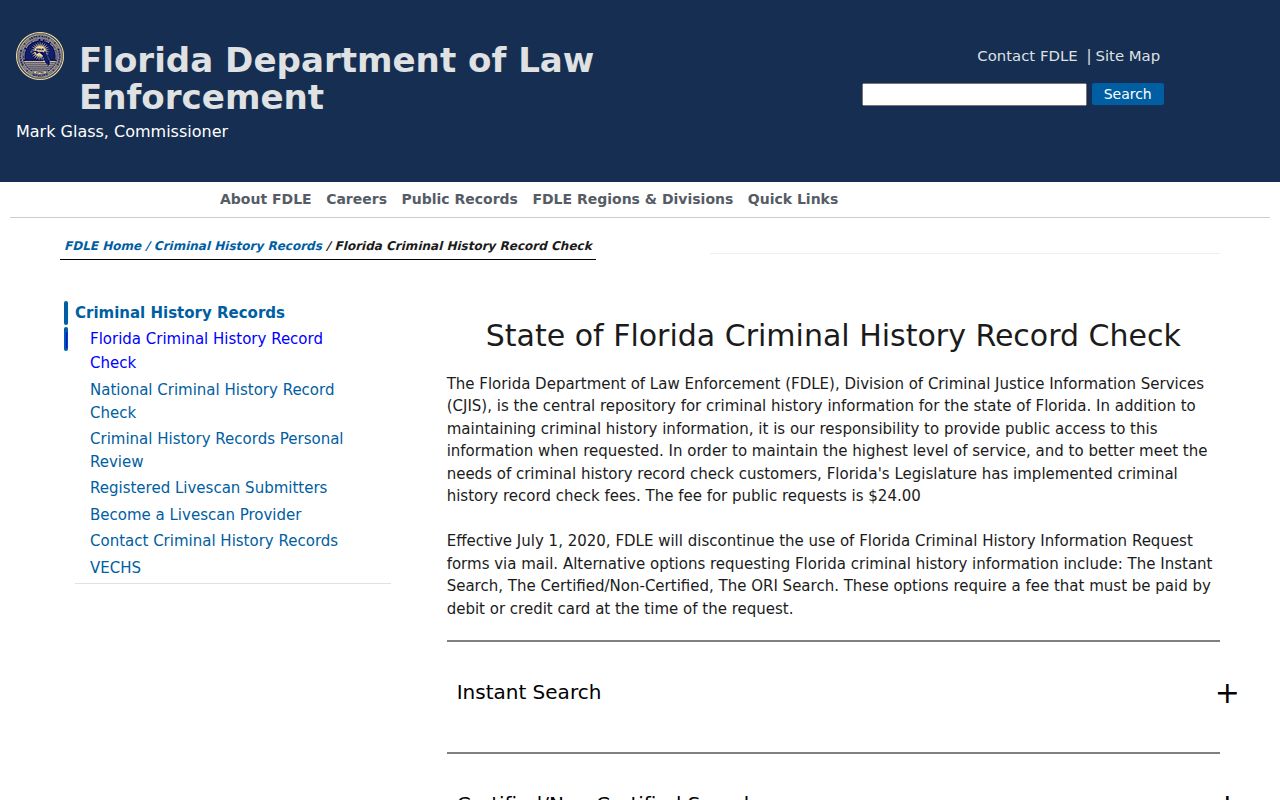
The state screen is broader than Jefferson County OCRS, but it contains less local document detail and can depend on matched disposition reporting.
| Official product | Identity basis | Published cost | Result |
|---|---|---|---|
| FDLE Instant Search | Name and demographics | $24 plus $1 card processing | Immediate, noncertified Florida result |
| FDLE staff search | Name and demographics | $24 | Certified in 6 to 7 business days or noncertified in 5, plus mail |
| Jefferson OCRS | Name or case number | Free public index | Local docket; copies cost extra |
| FDLE Personal Review | Fingerprints | Verify current packet | Subject review and correction route |
Jefferson Name Matches Need Proof
The FDLE Computerized Criminal History Internet Search asks for identifying details before payment and candidate review. Last name, first name, and date of birth are central controls; middle name and other demographics can help narrow results. Aliases or spelling differences may require more than one careful approach. The result remains a demographic match unless fingerprints confirm identity.
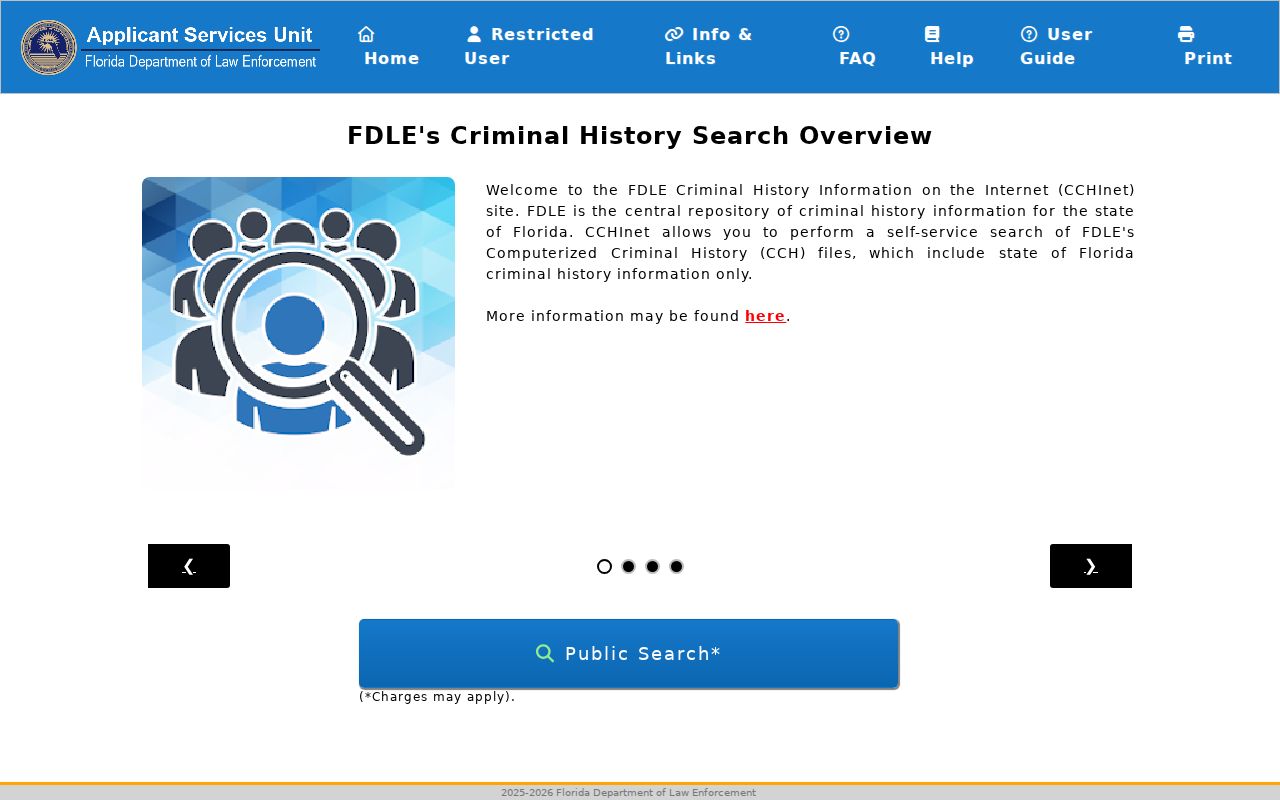
The interface makes the distinction practical: better input can reduce false candidates, but only fingerprint comparison resolves identity with confidence.
| Field | Use | Caution |
|---|---|---|
| Last and first name | Required in the normal transaction | Spelling and aliases affect matches |
| Middle name | Narrows common names | May be missing from old records |
| Date of birth | Separates candidates | Still demographic, not fingerprint proof |
| Race or sex | May further narrow | Availability depends on the transaction screen |
Types of Criminal Records
Jefferson County agencies create records at different moments. JCSO, MPD, FHP, FWC, or another arresting agency retains its own incident and arrest report. The county jail creates a booking record. The State Attorney creates the formal charging decision, while the Clerk holds the filed case. FDLE compiles statewide reported history. FDC maintains state custody and felony supervision information. The public registry covers statutory offender and predator data, not a person's complete criminal history.
- Agency report: narrative facts, alleged conduct, and the report number.
- Booking record: intake, Resident ID, charge, bond, custody, and release details.
- Court case: filed counts, hearings, pleas, disposition, sentence, and costs.
- Repository history: Florida arrest cycles and matched outcomes reported to FDLE.
- Custody or registry record: FDC, federal, or statutory registry status with a narrower purpose.
The correct custodian is more important than the broad label “criminal record.” Asking JCSO for an MPD investigation or asking the Clerk for a jail booking sheet sends the request to the wrong office.
Which Jefferson County Counter?
Jefferson County's record offices sit close together in and near Monticello, yet custody stays divided. Court cases and certified dispositions belong at the Courthouse Circle criminal counter. Current jail and sheriff-created records belong at Industrial Park. MPD holds reports made by city officers. County administrative records go to the county custodian on West Walnut Street.
The official Jefferson County homepage shows the courthouse as a civic landmark and routes readers to county departments.
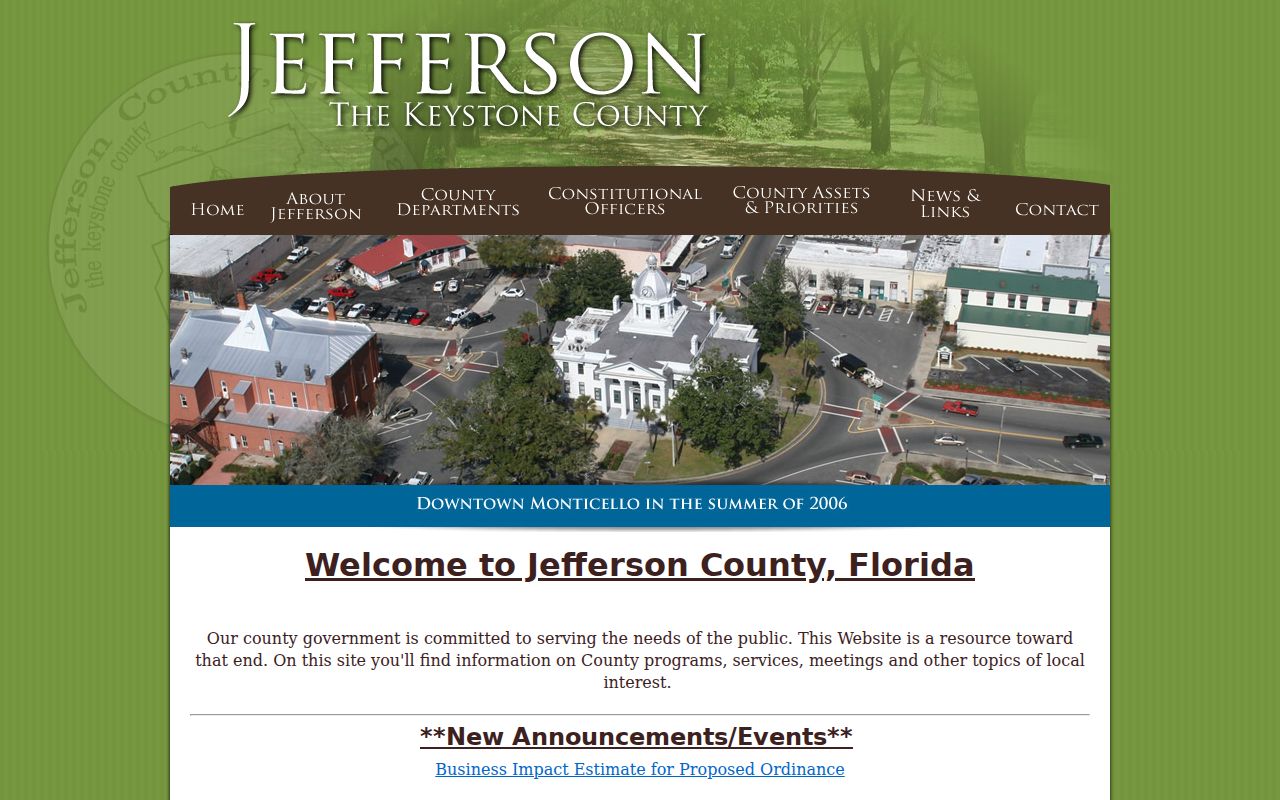
That courthouse image is useful for orientation, but the historic center should not be confused with the active sheriff and jail address.
Jefferson County Clerk
1 Courthouse Circle
Monticello, FL 32344
(850) 342-0218 ext. 233
Weekdays, 8:00 a.m. to 5:00 p.m.
JCSO and County Jail
171 Industrial Park
Monticello, FL 32344
(850) 997-2523
Confirm records-counter availability.
County Records Custodian
450 W. Walnut Street
Monticello, FL 32344
(850) 342-0287
publicrecords@jeffersoncountyfl.gov
Monticello Police
195 S. Mulberry Street
Monticello, FL 32344
(850) 342-0150
City incident and arrest reports.
What a Jefferson County Criminal Record Shows
The fields depend on the product. An FDLE history groups identity data with arrest cycles and reported outcomes. A Jefferson County court file is organized by case number, division, charges, docket events, documents, judgment, sentence, and costs. A JCSO intake record centers on Resident ID, booking, custody, bond, and release. Never merge those views into one supposed master file.
| Name & Identifiers | Reported names, aliases, demographics, case numbers, booking numbers, or state identifiers. |
|---|---|
| Arrest / Booking Data | Arresting agency, date, alleged charge, intake, Resident ID, custody, bond, and release. |
| Charges & Statutes | Arrest allegations or prosecutor-filed counts, degree, and legal citation where entered. |
| Disposition | Pending, dismissal, nolle prosequi, acquittal, plea, adjudication withheld, or adjudication of guilt. |
| Sentence | Jail or prison term, probation, fines, costs, restitution, and other court orders. |
| Custody / Supervision | Local jail, FDC prison or community supervision, federal custody, or release status. |
Note: Late or unmatched disposition reporting can make an FDLE history differ from the newest Jefferson County docket.
Jefferson County's Current Jail Trail
The old jail on West Dogwood Street is part of local history. It is not today's booking counter. Active sheriff and jail work occurs at 171 Industrial Park. The JCSO FAQ directs readers to the Media Intake Report for a Resident ID and gives practical custody details. The lobby kiosk accepts cash or card around the clock for resident accounts, money orders are no longer accepted, and PayTel calling is available during the posted daily window. Visitation depends on cell assignment.
The Jefferson County Sheriff's Office homepage identifies the active agency and headquarters used for criminal records and jail questions. For current intake, follow the sheriff's official FAQ and call when the online report is missing or unclear.
Public Access Laws
Florida Public Records Law governs nonexempt agency records, while court files follow judicial access rules and FDLE dissemination follows chapter 943. A custodian may redact exempt data rather than close an entire public record. Actual duplication cost and a special service charge can apply when a request takes extensive labor or technology. A focused request should name the event date, place, record type, agency, case or booking number, and desired format.
Key Florida access laws:
Chapter 119, Florida Statutes provides access to nonexempt agency records and permits lawful cost recovery.
Florida Constitution article I, section 24 establishes constitutional access subject to exemptions.
Florida Statute 943.053 governs FDLE criminal-history dissemination.
Florida Rule 2.420 governs public access and confidentiality in court records.
The Jefferson County public-records page lists mail, phone, and email channels for county administrative records.
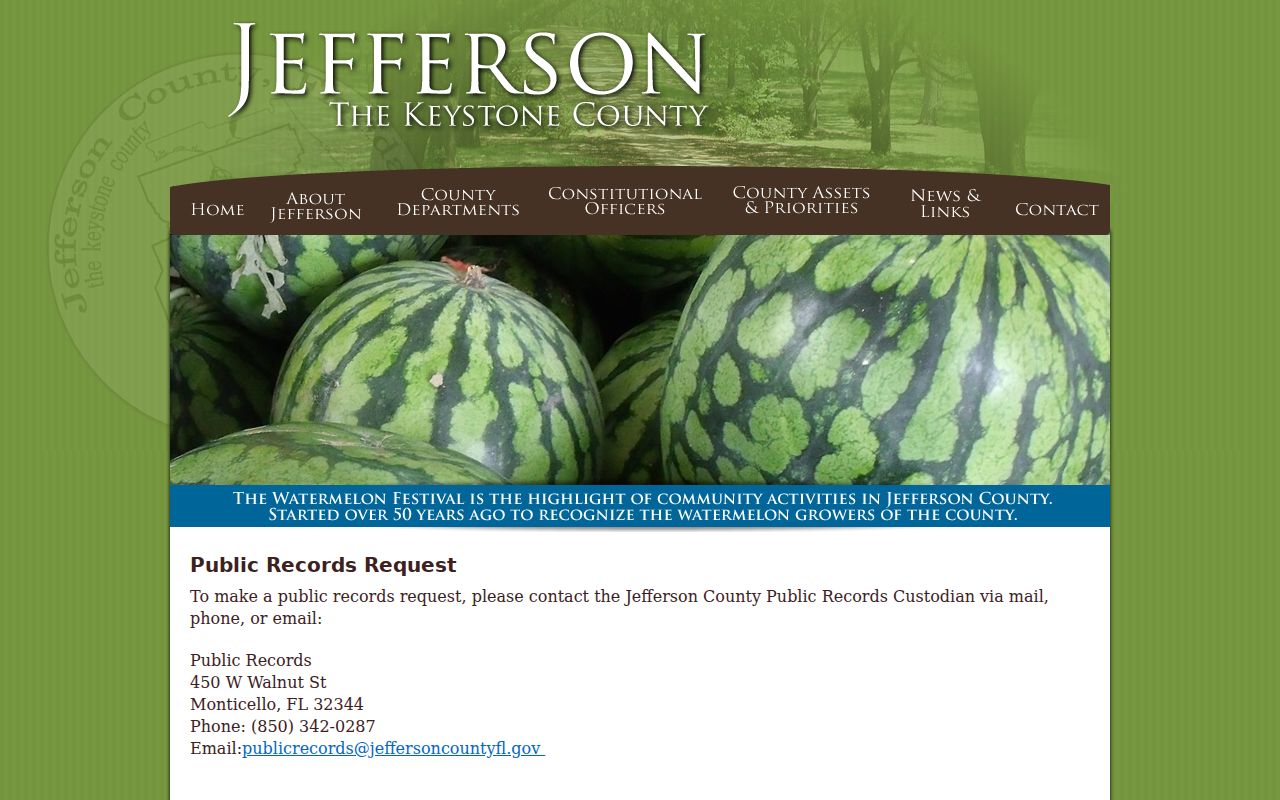
The contact block helps route county records, but sheriff, police, court, and prosecutor files still go to their own custodians.
When Jefferson Court Images Are Missing
OCRS can show an index without the whole document. That does not mean the filing never existed. Call the Clerk's felony and misdemeanor division at extension 233 or make a targeted request through the Clerk public-record request channel. Give the case number, document title, date, and the exact copy needed. Small orders may be produced while a visitor waits, subject to staff and file availability.
The Clerk states that the first 30 minutes of staff time are free, copies are $1 per page, and certification is $2. Additional staff time can be charged at the employee's hourly rate. Expanded electronic access can also depend on a user agreement. Confidential filings and juvenile material remain restricted.
A precise written request can remove a displayed full Social Security number or full bank or card number at no charge. Identify the case number, document title, and page number. Do not repost the exposed identifier.
Sealed, Expunged, and Restricted Records
Florida treats sealing and expunction as distinct remedies. A sealed file remains but leaves ordinary public view. Expunction removes or destroys the record as the statute directs, while limited confidential handling can remain. Juvenile files, victim identifiers, medical data, active investigative information, and protected personal numbers may also be restricted without a seal or expunction order.
A Jefferson County applicant typically obtains a certified disposition from the Clerk, applies to FDLE for a certificate of eligibility with fingerprints and required case materials, then files the petition, affidavit, certificate, and proposed order in the court that handled the case. The Clerk provides a packet. FDLE's certificate application fee is commonly $75, but the current packet and local filing total should be confirmed before payment.
Eligibility is fact-specific. A withheld adjudication is not a promise of relief, and some offenses are barred. Review Florida Statute 943.0585 on expunction and Florida Statute 943.059 on sealing with the current FDLE materials.
Jefferson Custody Has Three Layers
JCSO documents current county jail intake and local release. The Florida Department of Corrections covers state prison and adult felony community supervision. The Federal Bureau of Prisons covers federal custody. Jefferson Correctional Institution is an FDC prison, not the Jefferson County Jail. A person who has left local custody may therefore disappear from the intake report while remaining searchable in a state or federal system.
The Florida Commission on Offender Review is the state's parole and conditional-release authority, while FDC administers supervision.
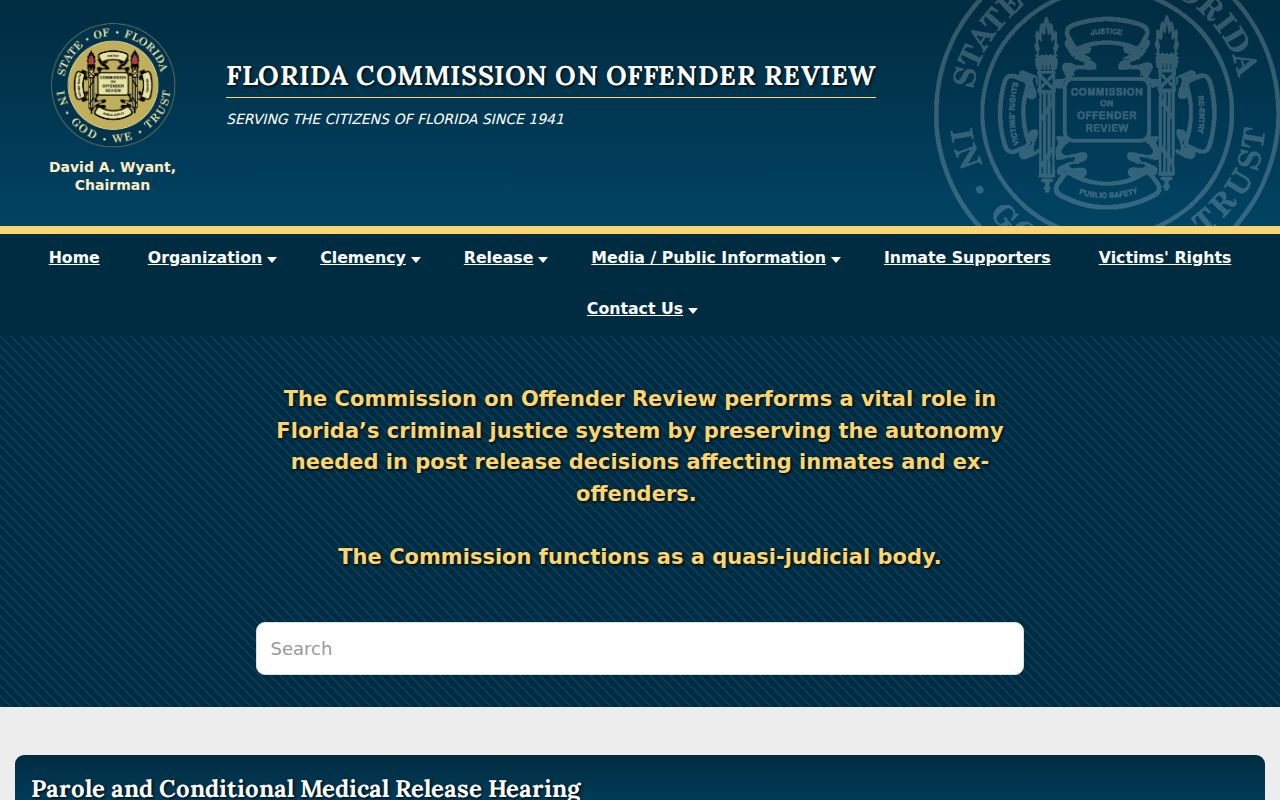
The Commission's official page supplies release-authority context that an old court docket cannot show by itself.
Federal cases use a separate court layer. Jefferson County lies in the Northern District of Florida, and federal dockets are accessed through PACER rather than Jefferson OCRS.
The Northern District of Florida website confirms the federal court serving the county.
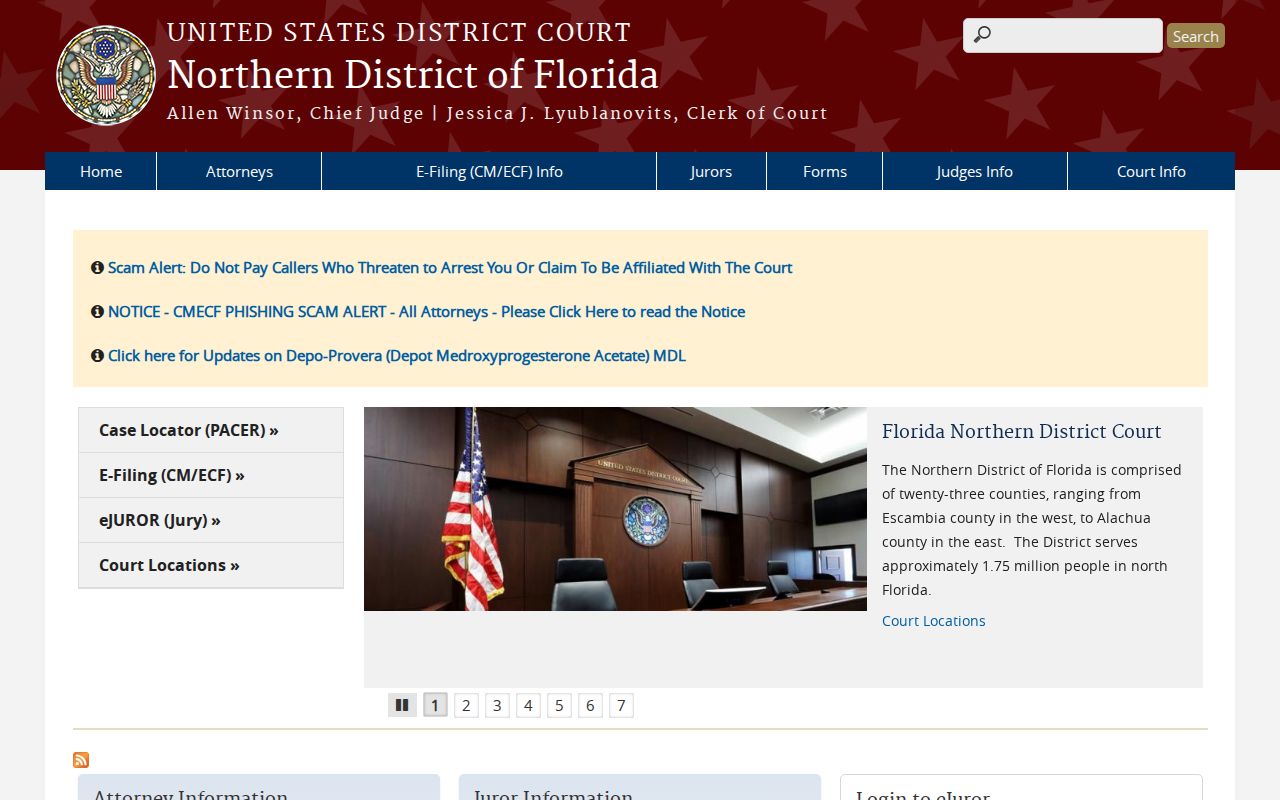
The district site identifies the court layer, while docket searches and documents run through the federal access system.
The PACER homepage provides the official federal case account and search channel.
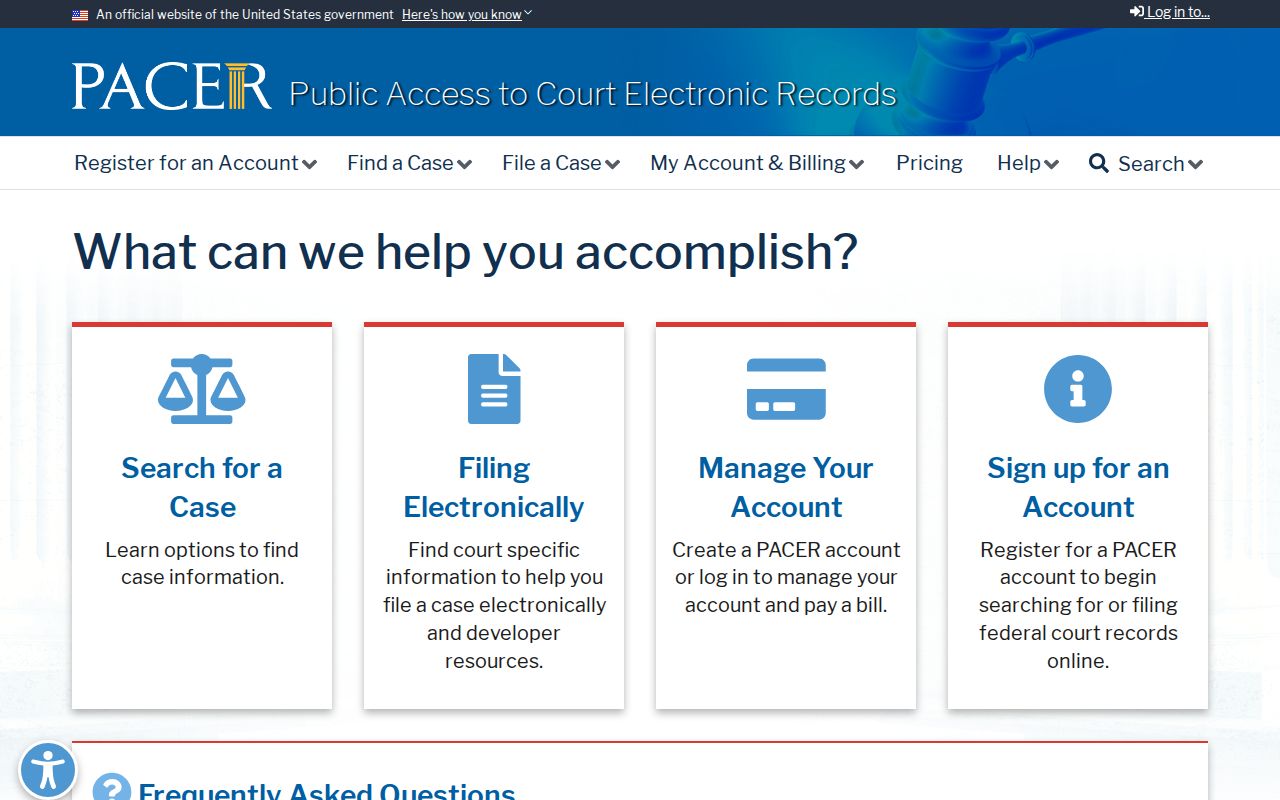
PACER does not hold Jefferson County Circuit or County Court files. Those remain with the local Clerk.
Read Jefferson Criminal Record Terms
Florida case terms can change the meaning of a result. Read the count-level disposition instead of relying on the case caption or first arrest label.
- Nolle prosequi
- The prosecutor ends a filed charge.
- Adjudication withheld
- The court withholds a formal adjudication of guilt after a plea or finding.
- Capias
- A court command directing that a person be taken into custody.
- Disposition
- The outcome recorded for a case or individual count.
- Recognizance
- Release based on a promise and any stated conditions rather than cash security.
“Disposed” means an outcome was entered. It does not mean conviction. Likewise, a pending case has no final outcome yet. Compare each count, because one case can contain different results.
Criminal Records by City in Jefferson County
Monticello is Jefferson County's only incorporated city and its county seat. MPD keeps city-created incident, communications, crash, arrest, and investigative records. City arrestees are booked through JCSO, and municipal ordinance and criminal matters are handled through the Jefferson Clerk rather than a separate city case portal. That division makes a focused Monticello record path more accurate than padding the list with unincorporated places.
Monticello Criminal History
2020 population 2,589 · MPD reports, county booking, and Jefferson OCRS court files.
Jefferson County's Rural Record Split
Jefferson County covered about 609 square miles and had 14,510 residents in the 2020 Census. The 2025 Census estimate was 16,007. Its span from Georgia toward the Gulf includes waterways and large unincorporated areas. That geography helps explain why JCSO is central but not alone. MPD handles the incorporated city, while FHP and FWC can create reports tied to state roads, wildlife, or boating enforcement.
Crime counts must be filtered by agency and a complete reporting year in the official FBI crime-data system. MPD and JCSO counts are not interchangeable, and reported offenses are not arrest totals. A small population can also make percentage changes look dramatic when the raw numerical shift is modest.
Use agency context with every statistic. A county resident can be arrested by a state agency, and an event inside Monticello can create both an MPD report and a JCSO booking. The local source tells where the event began; the court record tells how prosecution ended. FHP traffic enforcement and FWC wildlife or boating enforcement also create agency-held reports that do not become sheriff narratives merely because JCSO completes the county booking.
For that reason, a sound Jefferson County criminal record search begins with jurisdiction. Record the badge agency, court division, and custody system before comparing dates and outcomes.